

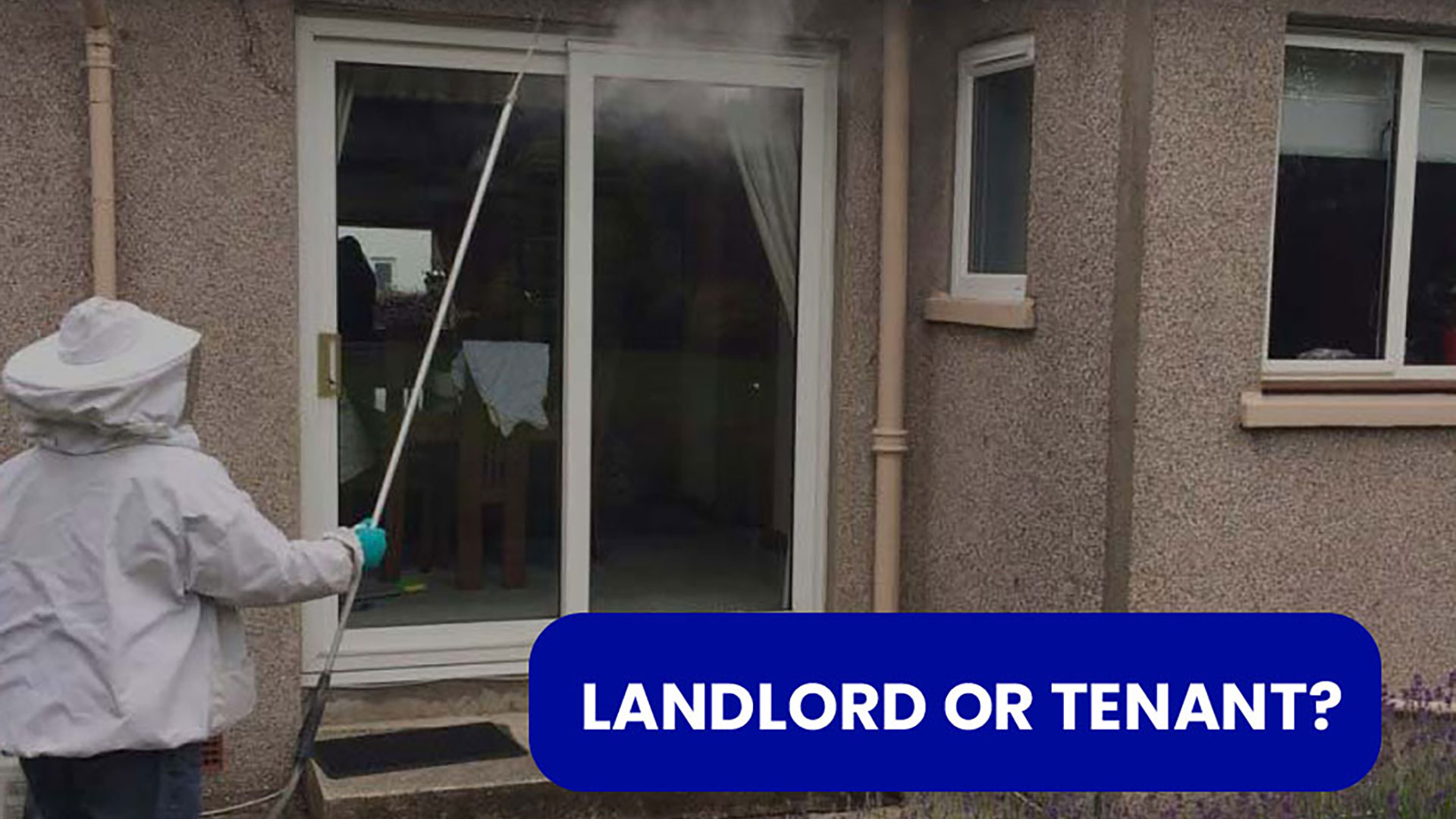
Who pays for pest control? The landlord or the tenant?
This is an age old question people ask when they have a pest problem in their rented property.
What is the answer you ask?
Well it depends…
You see the answer will usually be in your tenancy agreement. This is why we always advise people to have a clause covering pest control in their tenancy agreement otherwise it can result in a lot of finger pointing and a slow response in resolving the issue potentially allowing the problem to get worse.
Most tenancy agreements will usually stipulate that the landlord is responsible in keeping the property in a habitable state and the tenant is responsible for maintaining sanitary conditions.
In our experience overwhelmingly the landlord has been responsible for pest control works required in the property. There are several reasons for this such as:
- A structural issue like a hole in a wall or defect in the roof has allowed the pests entry and resulted in the infestation.
- The property was already suffering from a pest problem prior to the tenant moving into the property or has had pest problems in the past and the problem has reoccurred.
- If the tenancy agreement states that the landlord is responsible for pest control in the property or ensuring that the property is habitable then that usually means the landlord is responsible for the repair.
Please bear in mind that the scenario presented can have a bearing on the situation.
For example if you have pets in the property and they end up with fleas. In this scenario it is difficult to ascertain liability, as although the pets may have not caused the problem, the fleas will not usually infest a property that has no pets.
If your lease says no pets allowed and you have pets in the property which get fleas and the property requires treatment then it is difficult to see how the landlord should be responsible for the treatment of the property.
Also if you have travelled recently and been exposed to bedbugs and brought them back to the property. It can be difficult to ascertain liability in these situations without reading your tenancy agreement and speaking to the landlord.
In all cases such as this it makes sense to speak as soon as you are aware of the issue with the landlord or managing agent to discuss your options. If there is a dispute then legal help may be the best option.
Please note that what we have said in this article is mainly based on our experience of pest control in tenanted properties in the past and from reading other related material. We are not offering legal advice and do not take any liability whatsoever for any inaccuracies in the information presented above. When is doubt always consult an appropriate legal professional.
A point I would like to add for landlords. Some landlords are very proactive in repairs regardless of liability and some do not see why they should pay for pest control especially when they have a good case for not paying. I would always like to bring it to their attention that in my experience in the past I have seen many instances where tenants have not taken adequate steps to resolve an issue and have left the property leaving the landlord with an even more expensive problem to fix further down the line as pest problems, as a rule of thumb, only ever get worse with time. I am not advocating on behalf of either party but I would strongly urge you to protect your investment as promptly as possible.